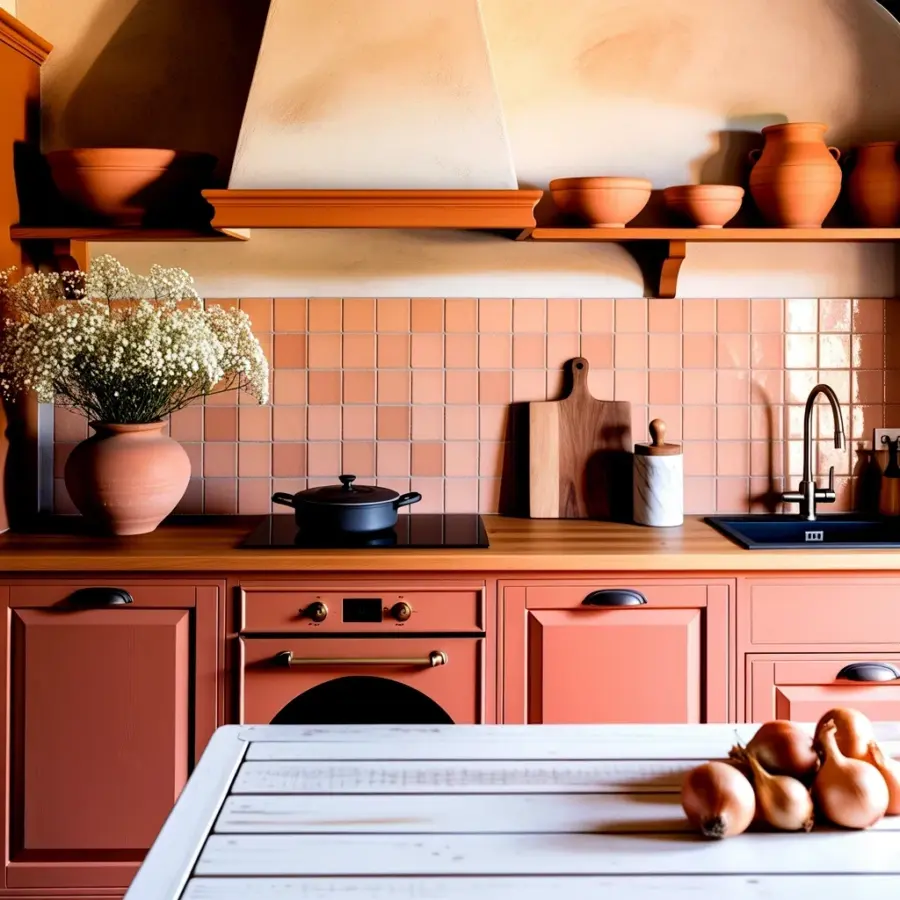
I’ve been in enough kitchens to spot a problem before the paintbrush even dries. And the biggest oops I see with painted kitchen cabinets is this: people fall in love with a color, paint everything, and then realize their wood accents (flooring, open shelving, butcher block counter, even furniture) feel like strangers at the party. That cold, disconnected look? Not the modern organic style you were dreaming of. Here’s the thing: it’s totally fixable if you just think about wood and paint as a pair, not a one-night stand.
Mistake #1: Choosing Your Cabinet Color Before You Even Look at the Wood
You walk into the paint store, see a gorgeous sage green, and bam – that’s the one. I get it, I really do. But then you get home, the cabinets are done, and your beautiful walnut floors suddenly look orange next to it. Or your white oak countertop feels washed out. Not gonna lie, I’ve done this myself. I painted my own island a dusty blue, then installed a butcher block top that had yellow undertones. It looked bruised, not boho.
The fix is boringly simple: choose your paint color and your wood tone at the exact same moment. Bring a sample of the flooring or a photo of the wood to the paint store. Hold them together. A warm oak or walnut will balance crisp whites, soft grays, and sage greens beautifully. Cool-toned wood (like bleached ash or gray-stained oak) works better with charcoal or navy. My advice? Start with the wood, then pick the paint. That order never fails.
Mistake #2: Ignoring the Undertones in Your Wood Accents
Wood is not just “brown.” Oh no. There’s a whole rainbow hiding in the grain. Some oak leans pink (yes, pink!), some walnut has greenish undertones, and hickory can go orange. When you paint your cabinets a cool white like Chantilly Lace, then put in a red-toned cherry floor, the clash is real. It’s like wearing a gray sweater with red pants – not a good look.
So here’s what I tell people: identify the dominant undertone in your wood first. Warm undertones (golden, reddish, yellow) need warm cabinet colors – think cream, greige, or olive. Cool undertones (gray, taupe, pinkish) love crisp white, slate blue, or soft black. And if you have a wood accent that’s truly neutral (like white oak with no strong cast), you win the lottery – almost any paint works. But test it anyway. Honestly, a little swatch on a cabinet door saves your sanity.
Mistake #3: Forgetting That Wood Accents Aren’t Just Floors
When people say “wood accents,” most picture the floor. But that’s just one piece of the puzzle. Open shelving, a butcher block island top, wooden range hoods, even a chunky wood dining table near the cabinets – all of those count. And they all need to play nice with your cabinet color.
I once saw a kitchen with white painted cabinets, a beautiful oak floor, and then this random cherry wood wine rack that screeched against everything. One thing. One small accent. It ruined the whole room. So make a list of every wooden element in your space. Here’s a quick checklist:
- Flooring (engineered, hardwood, or tile that looks like wood)
- Open shelving or floating shelves
- Butcher block countertops or islands
- Wooden range hood or ceiling beams
- Furniture like a farmhouse table or bar stools
- Wood trim around windows or baseboards
Match all of them to the same tone family, or deliberately contrast one hero piece (like a dark walnut island) against lighter cabinets. But don’t let a random stray wood piece be the awkward cousin at the dinner party.
Mistake #4: Going Too Matchy-Matchy With Your Wood Tones
Ok so we all know matching is bad, right? But then some people swing too far the other way and try to match every wood accent perfectly. That’s a trap, too. A floor, a shelf, and a cutting board all in the same exact species and finish? It looks like a showroom, not a home. There’s no life in it.
A smarter move: pick one dominant wood tone (say, warm oak for the floor) and then add a secondary wood with a slightly different grain or shade. Maybe a walnut open shelf above the sink. The contrast creates depth. The rule of thumb I use: two wood tones is great, three is risky unless one is a minor accent (like a tiny cutting board). And always vary the grain – a tight-grained maple floor pairs nicely with a highly figured oak island top. Trust me, your space will feel curated, not contrived.
Mistake #5: Overlooking How Light Changes Your Wood and Paint Combo
You pick a perfect sage-green cabinet and a warm hickory floor under those big north-facing windows. Looks dreamy in the morning. But at 4pm, when the sun hits from the west, that hickory turns a screaming yellow, and the green is now a muddy olive. Light direction is a beast, I swear.
I learned this the hard way in my own kitchen. I chose a white cabinet color (Swiss Coffee) and installed a pale ash floor. In daylight it was gorgeous. At night under warm LEDs, the floor looked pink and the cabinets looked beige. A complete disaster. Now I always tell people: check your wood and paint samples at three different times of day – morning, afternoon, and under your planned evening lights. Hold them in the same spot where the cabinets will go. And if you have natural wood grain with lots of movement, the light will make it dance. That’s a good thing. But only if the dance is in harmony, not a fight.
Mistake #6: Skimping on Real-World Samples (and I Mean Real Ones)
That tiny paint chip from the store? Useless. I know, I use them too. They’re convenient. But they don’t show you how the color interacts with the wood grain, especially if your wood has open pores like oak or rustic walnut. The paint absorbs differently on different surfaces. And a color that looks soft gray on the chip might turn baby blue on your primed cabinet door.
I once had a client who used a color called “Oyster” on her cabinets. The chip looked perfect next to her white oak floor. When she painted a test board? Oyster turned lavender. Lavender. She cried a little. Not gonna lie, I’ve seen it happen more than once. So do this: buy a quart of paint, get a cheap piece of MDF or an old cabinet door, prime it, and paint it exactly as you would the real thing. Then lean it right next to your wood floor or shelving. Live with it for a weekend. Move it around. See it in different light. It’s a pain, but it saves you from a very expensive mistake.
Honestly, the whole process of mixing painted cabinets with wood accents is less about rules and more about paying attention. Pick your materials as a pair, check undertones, test samples like your life depends on it, and don’t be afraid of a little contrast. Your kitchen will feel intentional, cozy, and actually modern organic – not just a pile of nice things that don’t talk to each other.
Next time you’re planning a kitchen refresh, grab a wood sample before you pick your paint. Your future self (and your kitchen) will thank you. And maybe your countertop won’t turn lavender.
#PaintedKitchenCabinets #KitchenCabinetColorIdeas #WoodAccents #ModernOrganicStyle #WhiteKitchenInspo